
How Many Outlets Can You Put on One 20-Amp Circuit?
Short answer: in a home, there is no set number. The National Electrical Code does not limit how many outlets go on a regular 20-amp circuit in a house. What matters is how much power the things you plug in use at the same time. A 20-amp circuit can carry about 2,400 watts before the breaker trips.
That "no limit" rule for homes is explained by electrical code teacher Mike Holt in EC&M. At Cain Electric in Gray Summit, our residential electricians plan and fix circuits in homes all over the St. Louis area. Here's how to tell if a circuit has too much on it.
Why doesn't the code limit outlets in a home?
The code counts home outlets as part of the whole house, not one by one. When an electrician works out how much power a house needs, regular outlets are already counted in a set amount per square foot of the home. No extra power is added for each outlet (IAEI Magazine).
So the code doesn't care if a bedroom circuit has 6 outlets or 12. An outlet that nothing is plugged into uses no power. The breaker only reacts to what is running.
What about the "13 outlets" rule you see online?
The 13 number is for businesses, not homes. In stores and offices, the code counts each outlet as 180 watts (180 VA). A 20-amp circuit is 2,400 watts, and 2,400 divided by 180 is about 13 (EC&M).
Many websites mix this up and say homes are limited to 13 outlets too. That's not how the code treats a house.
How much can a 20-amp circuit really handle?
A 20-amp circuit at 120 volts can carry 2,400 watts. That's the most it can carry before the breaker trips.
| Circuit | Volts | Most it can carry |
|---|---|---|
| 15-amp | 120 | 1,800 watts |
| 20-amp | 120 | 2,400 watts |
For things that run for 3 hours or more, like a space heater left on all night, it's smart to stay under 80% of that. On a 20-amp circuit, that's about 1,920 watts. We explain the 80% rule in our post on how many Christmas lights you can plug into one outlet.
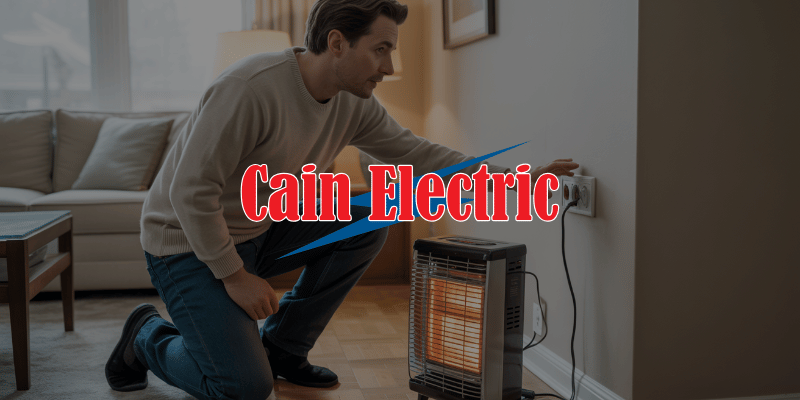
To check your own load, look at the label on each thing you plug in. It lists watts or amps. Many space heaters are 1,500 watts, so one heater can use most of a 20-amp circuit by itself.
How do you know a circuit has too much on it?
A circuit with too much on it will usually tell you. Watch for these signs:
- The breaker trips when two things run at once, like a space heater and a vacuum.
- Lights dim when something big turns on.
- An outlet or cover plate feels warm.
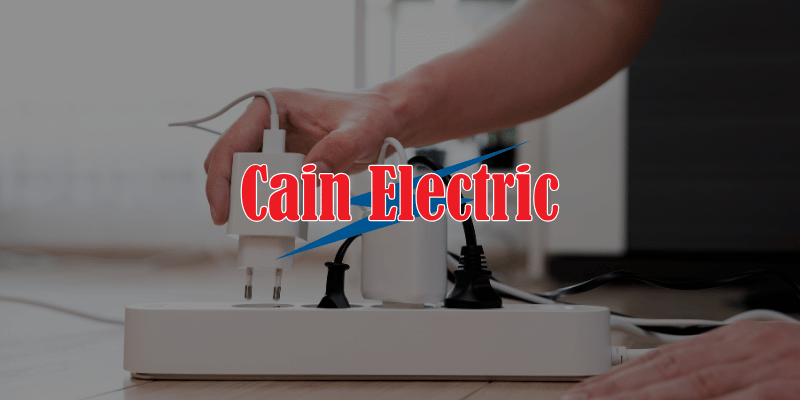
- You need power strips or extension cords to reach enough outlets.
If you see any of these, don't just keep resetting the breaker. Our post on why your breaker keeps tripping covers what can be going on behind the wall.
Can you add more outlets to a circuit?
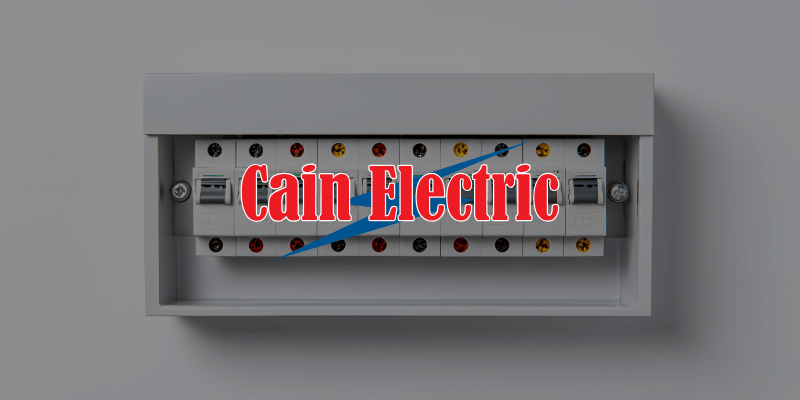
Often, yes. If the circuit has room left for what you plan to plug in, an electrician can add an outlet to it. If the circuit is already busy, the better fix is a new circuit run from the panel.
Some rooms need their own circuits no matter what. Kitchens, laundry rooms and bathrooms have their own rules. Our post on dedicated circuits for a kitchen remodel walks through those.
Your city or county inspector has the final say on any new wiring. Our post on electrical permits in Missouri explains when you need one.
FAQ
Is there a limit on outlets on a 15-amp circuit in a house? No. The code doesn't set a number for either 15-amp or 20-amp regular circuits in a home. A 15-amp circuit just carries less power, about 1,800 watts.
Does an outlet use power if nothing is plugged in? No. An empty outlet uses no power. Only the things plugged in and turned on count toward the circuit's limit.
Can too many outlets cause a fire? The outlets themselves don't. Running too much at once on one circuit, or using worn outlets with loose wires, can make heat. That's why a warm outlet is a reason to call.
Need more outlets or a new circuit?
If your breaker keeps tripping or you're living on power strips, Cain Electric can check your circuits and tell you the safest fix. We serve homes in Gray Summit, Eureka, Chesterfield, Kirkwood and across the St. Louis area. Learn more about our residential electrical services or call (314) 607-8687 for a free estimate.